 New Zealand
  United Kingdom
  Singapore
  Malaysia
  Canada (Français)
 Australia








How Bunji saved up to 3 hours of onboarding time per recruit 

How Redimed saved 30% of admin time and reinvested it into better patient care
Payday Super
The biggest shake-up to Australian payroll in decades is coming. From the 1 July 2026 start date to the closure of the ATO Clearing House, here is everything Australian employers need to know to get ready and stay compliant under the new legislation.


Connecting Families cuts workload by 75% with SmartMatch
What are the key Payday Super Changes?
Updated 12th December 2025
- The Start Date: Payday Super officially begins on 1 July 2026.
- The New Frequency: Employers must pay superannuation contributions at the same time as salary and wages (no later than 7 business days after the payday). The old quarterly deadline is gone.
- The SBSCH Closure: The ATO’s Small Business Superannuation Clearing House (SBSCH) will be retired, forcing businesses to adopt new payment methods.
- Stricter Penalties: The ATO will have increased visibility over non-compliance, with stricter penalties for late or missed payments under the updated Superannuation Guarantee Charge (SGC).
What is Payday Super?
From 1 July 2026, businesses will be required to pay super contributions at the same time as wages. This marks a significant shift in how super is
managed, moving from quarterly payments to aligning contributions with your weekly, fortnightly or monthly pay cycle.
This change means employee funds must land and settle within your employees’ super fund account within seven business days. That’s a big
shift from the 28 days employers currently have to send money to super funds every quarter.
For businesses, it will mean tighter cash flow management, additional operational processes and less room for error, with tougher penalties on
the line if you fall behind. The new draft ATO Practical Compliance Guideline also adds an extra layer of complexity for businesses to
understand. This is one of the biggest changes to superannuation in recent times and the key to getting it right is all in preparation.

How will Payday Super impact cashflow?
Our modelling shows the average business could need over $124,000 of additional working capital to meet the new payday super requirements. Planning for this early is essential. Use our Payday Super Cashflow Calculator to estimate how much additional working capital your business may need under Payday Super.
See our calculator in action below.
What is the Small Business Superannuation Clearing House (SBSCH)?
The Small Business Superannuation Clearing House (SBSCH) is a free ATO service that lets small businesses pay all employee super contributions in a single transaction, which the ATO then distributes to individual funds.
ATO’s SBSCH closure
One of the most urgent but lesser known changes is the retirement of the ATO’s Small Business Superannuation Clearing House (SBSCH), which is . The government has deemed the SBSCH unfit for the speed and volume of transactions required under Payday Super.
What this means for you
If your business currently relies on this free ATO service to pay super, you will no longer be able to use it once Payday Super comes into effect. You must migrate to a Payday Super compliant software solution or commercial clearing house – like HeroClear – before the deadline to ensure your employees are paid on time.

Why these super changes are important
Payday Super fundamentally changes the rhythm of your cash flow and compliance. It is not just a change in due dates; it is a change in financial liability.

“Received by” rule (critical)
Contributions must be received by the employee’s super fund within 7 business days of payday, not just “sent” by you.
If your current clearing house takes 3-5 days to process payments, you are at high risk of non-compliance before you even start.
End of quarterly “buffer”
You can no longer use superannuation accruals as working capital for up to three months.
Cash must leave your account every pay cycle (weekly or fortnightly), requiring a stricter, real-time cash flow strategy.
Severe penalties for “Day 1” lateness
The grace period is effectively gone. Missing the 7 business day window – even by 24 hours – triggers the new Superannuation Guarantee Charge (SGC).
This now includes daily compounding interest and administrative “uplifts” of up to 60%.
Admin Overload
Manual processing is no longer viable.
Performing a manual bank transfer or file upload every week doubles or triples your payroll admin time.
Automation is the only way to scale this frequency.
Payday Super explained in 2 minutes

How to Prepare for Payday Super
July 2026 is the deadline, but your systems need to be ready well before then. Here is your operational checklist:

1. Transition from the SBSCH
The ATO’s clearing house is retiring. You must switch to a commercial alternative such as HeroClear that uses real-time (NPP) payments to ensure contributions are received within the strict seven-day window.
2. Verify employee data
Incorrect details cause bounced payments and penalties.
Use digital onboarding tools to verify TFNs and check for stapled funds upfront, preventing errors before they occur.
3. Forecast new cash flow
You will lose your quarterly cash buffer. Use our Payday Super Cash Flow Calculator to model your new operational expenses and ensure you have liquidity for every pay cycle.
4. Automate reporting
Manual processing is too slow for the new deadlines. Ensure your payroll software has built-in STP integration to sync data in real-time and maintain a clear audit trail.
Still not feeling ready? Check out our The Payday Super Shift: 2026 Employer Report
Your Payday Super clearing house alternative – HeroClear
As Payday Super approaches, Employment Hero helps reduce compliance risk by bringing payroll, super and recordkeeping into one seamless platform. With automated super processing through HeroClear, integrated payroll workflows and secure, centralised recordkeeping, businesses can manage contributions every pay run with confidence.
Detailed audit trails, confirmations and reporting provide clear proof of compliance under the Practical Compliance Guideline, while real-time validation and transparent onboarding help ensure employee super details are accurate from day one. By eliminating the need for multiple systems or separate clearing houses, Employment Hero simplifies compliance, reduces errors and helps businesses stay on track, every payday.
Download our free Payday Super factsheet & checklist
-
 Read more: Payday Super factsheet: What employers need to know
Payday Super factsheet: What employers need to know
Learn what Australia’s Payday Super changes mean for your business. Learn how Employment Hero can help you manage super payments…
-
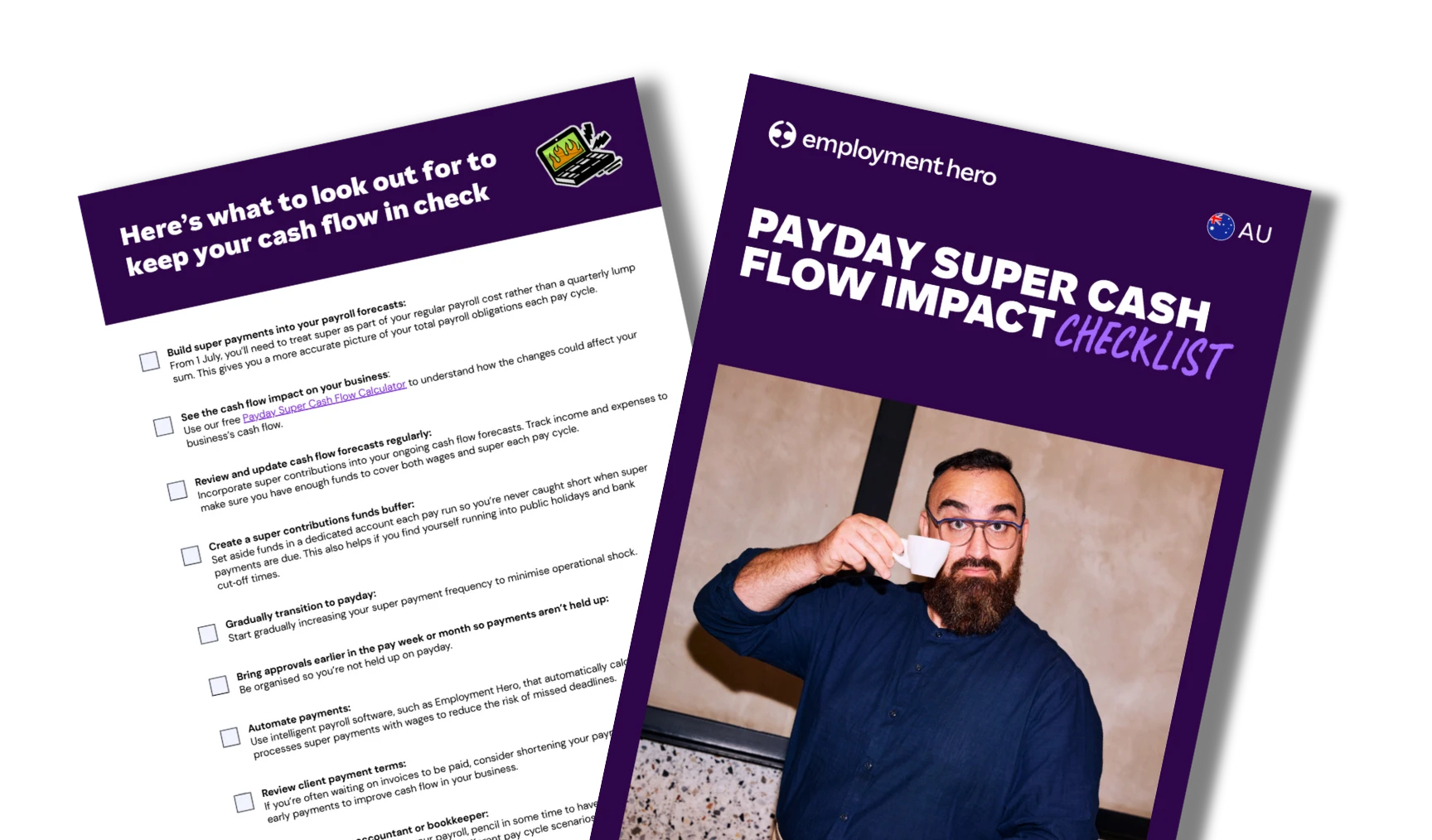 Read more: Payday Super cash flow impact checklist
Payday Super cash flow impact checklist
Businesses will need to strengthen cash flow management and streamline internal processes to meet the new deadlines set by upcoming…
-
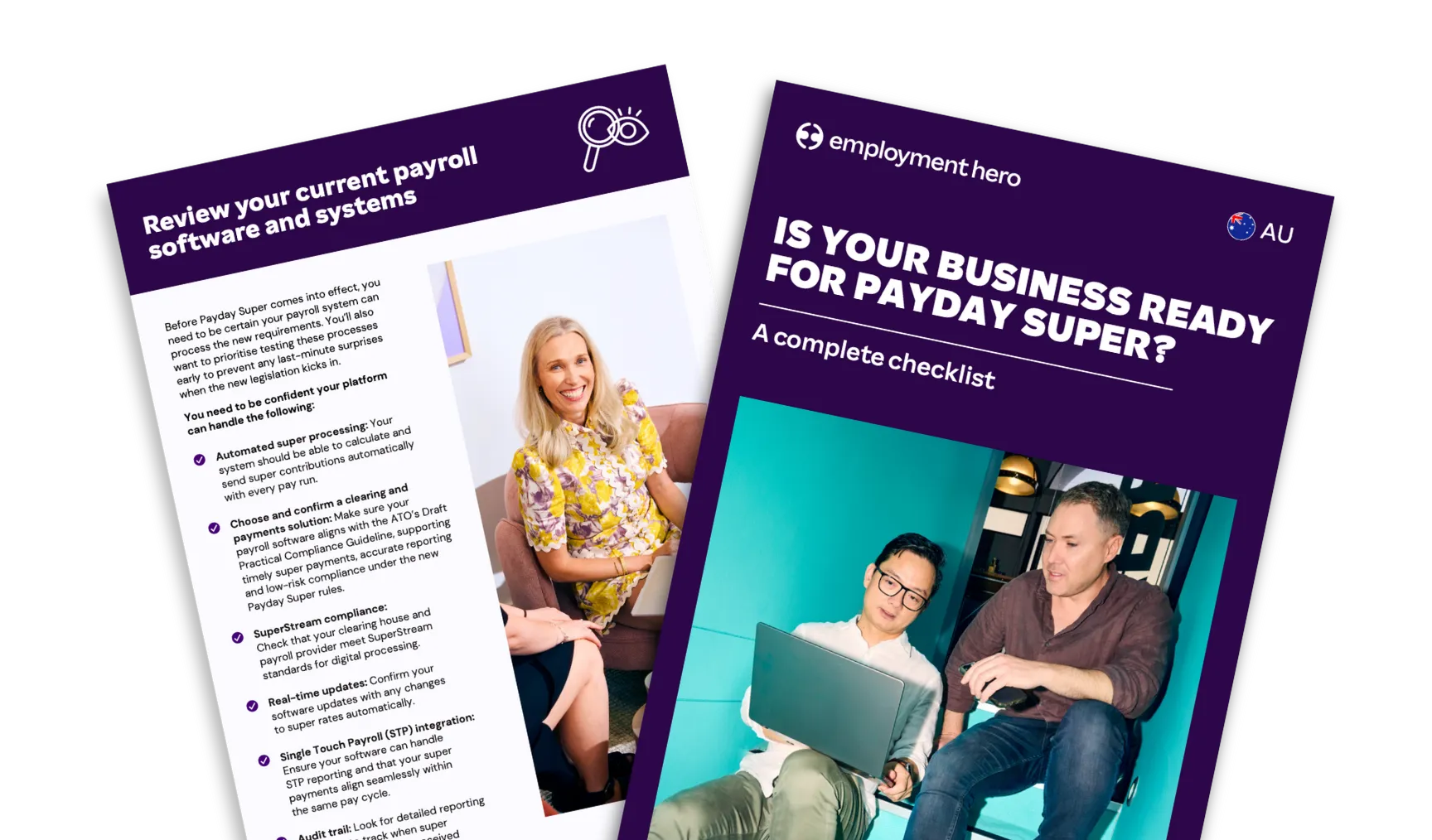 Read more: Payday Super Readiness Checklist
Payday Super Readiness Checklist
Is your business ready for Payday Super? Use our complete checklist to do an audit of your current systems and…


Watch our latest webinar to get your business ready
-
The Payday Super Bill explained: How to prepare for the 1 July deadline

Frequently Asked Questions
We know this legislation is complex. We’ve collated the most common questions to help clarify your obligations.
Read more FAQs on our Payday Super Questions Answered page.
Yes, Payday Super is mandatory for all employers.
Yes, the SBSCH stopped accepting new business registrations from 1 October 2025 and will close entirely on 1 July 2026. If you rely on the SBSCH, you’ll need to move to an automated payroll solution that facilitates super payments. We suggest signing up to our mailing list to be the first to hear about updates to HeroClear.
During the first year of Payday Super (1 July 2026 – 30 June 2027), the ATO will take a risk-based approach. Employers who make genuine efforts to pay super on time and fix any issues quickly will be considered low risk and unlikely to face penalties. You can learn more about the practical compliance guideline here.
Currently, many businesses pay super quarterly. The new super rules will require payments to be made each time you pay your employees whether that’s weekly or fortnightly. This means more frequent smaller payments instead of a large quarterly one.
Yes. Employment Hero includes a portal for your accountant or bookkeeper to access your payroll information securely. This makes it easy to collaborate and get the support you need.
Super is considered on time only when the fund receives and allocates the contribution within 7 business days of the “Qualifying Earnings (QE) day”. The QE day is the actual day you pay your employees, not the day you process the payroll.
The new SGC is materially higher. It includes a new default 60% administrative uplift on top of the shortfall and compounding interest. This uplift is only reduced to 40% if you haven’t had an SGC assessment in the previous 24 months, and further reductions are available through voluntary disclosure of late or incorrect payment.
No. The law applies to all employers regardless of size, and there is no legislated grace period. While the ATO may apply a risk-based approach for “low-risk” employers in the first year, the legal obligation to meet the 7-day window remains absolute.
The MCB moves from a quarterly cap to an annual cap under Payday Super. Capped employees will be monitored across the entire financial year rather than resetting every three months.
Yes. If they receive payments falling under “Qualifying Earnings” (wages, fees, bonuses), the 7-business-day rule applies from the day the payment is made.
Stay updated on Payday Super
Sign up to get the latest updates, expert insights and tools to help your business stay compliant – without the stress.
More Payday Super resources for you.
-
 Read more: The ultimate guide to Payday Super for employers (2026)
The ultimate guide to Payday Super for employers (2026)
With Payday Super now in effect, businesses need to know their new superannuation obligations. Learn all about it in our…
-
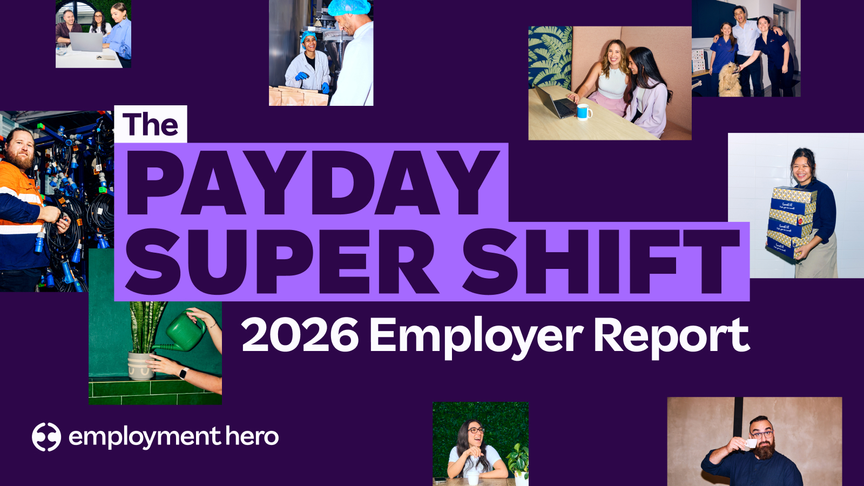 Read more: The Payday Super Shift: 2026 Employer Readiness Report
The Payday Super Shift: 2026 Employer Readiness Report
New research on the cash flow risk and compliance gaps facing Australian employers. Download the report now and access industry…
-
 Read more: Payday Super: What you need to know
Payday Super: What you need to know
Unsure what the new Payday Super rules mean? Avoid disruption & fines, join our webinar for expert guidance & live…
-
 Read more: The $124,000 Cashflow Crunch: Small and Medium Businesses (SMBs) at risk under proposed Payday Super Requirements
The $124,000 Cashflow Crunch: Small and Medium Businesses (SMBs) at risk under proposed Payday Super Requirements
1 Jul 2025 – New Employment Hero modelling and research shows businesses will need an extra $124,000 in working capital…
-
 Read more: Payday Super changes: What we’re fighting to fix and why it matters to you
Payday Super changes: What we’re fighting to fix and why it matters to you
Big changes are coming to how superannuation is paid in Australia. Here’s what we’re asking Treasury to seriously consider updating…
-
 Read more: Why choice in superannuation matters
Why choice in superannuation matters
What could be coming when Payday Super hits and what Employment Hero is doing about it.
-
 Read more: What is Employee Self Setup and why is it crucial for Payday Super?
What is Employee Self Setup and why is it crucial for Payday Super?
Australian businesses are facing major payroll reform. Learn all about Employee Self Setup (ESS) and why it’s crucial for Payday…
-
 Read more: How to prepare for Payday Super now with Employment Hero
How to prepare for Payday Super now with Employment Hero
Learn how Employment Hero helps businesses prepare for and manage the transition to Payday Super. Manage compliance, reduce admin, and…
-
 Read more: Superannuation changes 2025: What businesses should know
Superannuation changes 2025: What businesses should know
Check out all the 2025 changes to super in Australia and how they will affect employers.


How Employment Hero is already built to handle Payday Super
Don’t wait for the 2026 deadline. Our platform is already engineered to manage the transition, protecting your business from strict new penalties and administrative overload.
- HeroClear (embedded super-clearing solution): Our embedded HeroClear super clearing solution leverages real-time payments (NPP) to ensure contributions are received within the strict 7 business day deadline.
- Error-free onboarding: We automatically validate TFNs and check for stapled funds during self-setup, preventing data errors that cause bounced payments.
- Automated compliance: Super is auto-calculated and processed directly with every pay run, eliminating manual bank files and ensuring accrual accuracy.
- Employee transparency: Staff can track their contributions in real-time via the Employment Hero Work app, reducing payroll queries and boosting trust.
Disclaimer: The information on this page is current as at 12th December 2025 and has been provided to support employers using the latest information provided by the Australian Government.


